Sunday, October 5, 2014

Ardour Loom - Demo Review


Ardour Loom is a black metal band from Oregon.  They play an atmospheric, post-rock and ambient-filled style of black metal--not unlike many of the “Cascadian” bands from the surrounding areas.  The fact that Ardour Loom are yet another band clearly influenced by Wolves in the Throne Room and their ilk raises an interesting question: how long will it be until ripping off Wolves’ classic Two Hunters album becomes unacceptable in American black metal?  From the looks (or rather, the sounds) of Ardour Loom’s first untitled demo release, the current answer to that question is still “No time soon.” 

Featuring two twenty-minute tracks full of meandering post-rock and fast, melodic black metal, Ardour Loom’s debut release is a testament to how to effectively rip off a classic album whilst still appearing original and interesting.  While this demo release may not tread much new ground through its forty-minute runtime, it attempts to organize its content so as to appear not completely similar to its contemporaries and actually makes itself fairly interesting in the process, while still wearing its influences proudly on its sleeves.

Initiates of Formless introduces the listener with a slow, drum-driven passage (highly reminiscent of WitTR’s Cleansing) before beginning to flirt with the band’s harsher side, briefly indulging in quick blast-driven riffs before curling back into spacey melodicism.  After that, it’s your typical back-and-forth post-black metal affair for the remaining fifteen minutes of the track, switching through melodic post-rock build-ups, mid-paced atmospheric black metal, and blast-driven, ‘epic’ crescendos.  The second track, Ascend the Crimson Confluence, sees the band continue this basic build-up/crescendo/rebuild structure until its very end, driving the listener through a roller coaster of numerous crescents and valleys before leveling out in a slow outro.

While its individual ideas might not be totally original in themselves, the ways this demo’s pieces are stitched together create a fairly enjoyable and interesting listen, despite the fact that most seasoned black metal fans will realize that they've heard most of these ideas before.  Ardour Loom’s debut isn’t about doing things originally so much as it is doing them interestingly and effectively--for which they definitely succeed.  While clearly not reinventing the wheel--or even really turning it at all, for that matter--Ardour Loom show that not all ideas need to be torn apart, extensively scrutinized, and rebuilt in order to remain interesting; sometimes simply reorganizing the pieces you started with can yield results just as interesting as those birthed in complete isolation.


4/5

Buy the cassette: Parasitic Records
Jam the first track: Youtube

Tuesday, August 12, 2014

Emerald Weapon: Part II: Earth Encrypted (Review)


Emerald Weapon is at experimental black metal project from the Pacific Northwest USA.  The band debuted earlier this year in June with a self-titled EP which showed a band attempting to experiment not only with ambient/drone pieces, but also (and separately) very melodic punk-infused post-black metal.  On the band’s second EP, Part II: Earth Encrypted, the band continue to develop this style with another four (mostly short) tracks.

Featuring a short doomy introductory piece and three following "main" tracks, the band’s sound on the album can essentially boil down to either atmospheric, melodic drone or melodic d-beat/blast beat focused black metal not dissimilar to Black Monolith.  The first full track, “Crpyto-Imprisonment” is comprised of the latter style, beginning with d-beats and relatively basic punk-inspired chord progressions before smoothly transitioning into blast beats halfway through.

Although the band’s previous EP featured four tracks and was equal parts drone and metal, this second EP only includes one experiment with drone music on the third track, “Cement Rivers.”  Here, guitar feedback bombards the listener with rhythmic booms whilst a vaguely melodic lead whines underneath.  This crawling piece serves as a nicely placed break between the record's fairly similar two main tracks, allowing space for each to shine in the context of the EPs relatively short runtime.  The final track, “Earth Exposure”, picks up where “Crpyto-Imprisonment” left off with more blasts, d-beats, and melodic leads layered overtop black metal riffing.

It should be noted that while the band’s “post-black metal + d-beats” formula might remind oneself of other bands attempting the same basic combination of influences (Black Monolith specifically) the band is able to compile and execute this assortment of styles in a way that does make itself seem unique and--at the end of the day--still fairly interesting.  These tracks are neither too long nor too short but rather seem to hit that “sweet spot” of medium length, allowing both punk and black metal sections to run their courses before becoming tiring or repetitive, while simultaneously giving the listener enough time to completely digest the numerous layered melodies. 


For only the project’s second release, Part II: Earth Encrypted shows a definitely talented young band tightening its sound and--more importantly--figuring out not only where it wants to go, but how it plans to get there.

Sunday, April 27, 2014

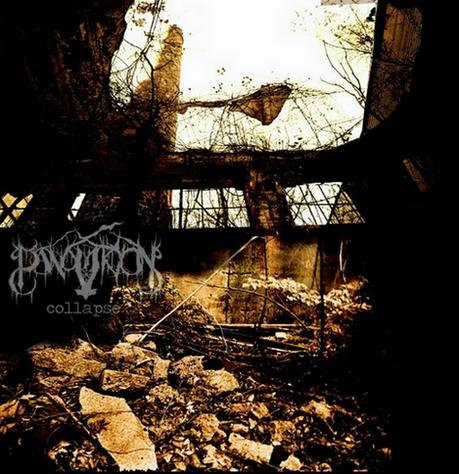
Panopticon -- Collapse (2009)


I felt inspired and decided to write a piece for Kentucky's one and only Austin "do-it-yourself" Lunn.  Here's a rather long piece concerning his project's 2009 sophomore effort, Collapse.  It's a few years old by now, but oh well.

Collapse is the sophomore record of Kentucky’s one and only one-man black metal show, Panopticon.  Formed in 2007 by mastermind Austin Lunn, the project’s acclaimed self-titled debut featured a hodgepodge of different black metal styles, all wrapped together in a raw, lo-fi, do-it-yourself package.  Additionally, the album also saw Lunn experiment with his mostly second-wave black metal sound through sparing use of post-rock, folk, and crust punk elements throughout the record’s six main pieces.  Despite all the acclaim the record received, Panopticon showcased a new band still trying to find its legs, as well as decide just where exactly it wanted to go in the first place. 

Lunn’s sophomore attempt, however, sees all that indecision melt away, making the record seem almost like that of a completely different project.  A concept album, Collapse flows wonderfully from start to finish and features one single, focused sound.  The album takes ideas only briefly touched upon in the band’s previous works and expertly expands them, making them now essential elements to both its sound and concept; no longer simply a black metal project, Collapse shows Lunn fully embracing his post-rock and folk sides for the benefits of better song and story-writing.  A fan of anarchistic and do-it-yourself mindsets, Collapse tells the story of a society oppressed, its fall into chaos, and eventual triumphant rebirth and reconnection.  From start to finish the album clearly embodies this tale, expertly using its different elements to highlight changes in plot and tone.

The Death of Baldr and the Coming War begins the album on a somber note; a slow, melancholic guitar drones softly as samples of different political pundits and newsmen play, their voices highlighting   the ills of a modern nation, and what they believe to be leading to its “inevitable” destruction.  Lunn’s drumming slowly builds tension before allowing the track to explode into chaos, his gruff barks angrily urging on a revolution so desperately needed.  After almost ten minutes of black metal fury, the track takes a most unexpected turn when all activity is abruptly cut off--a quick burst of static silences the previous chaos, replacing it with the sound of what seems to be a record player.  An acoustic ensemble, banjo included, arises and begins to play, slowly at first, before exploding in a full-scale bluegrass experience.  After the chaos of revolution, ’Baldr finds a way to end itself on a positive note, attempting to show that even in the midst of absolute destruction and uncertainty, it is the unity of the community that gives any cause its strength.

A clap of thunder signals the beginning of the album’s second movement, Aptrgangr
A lone acoustic guitar is aided by a dreamy lead, Lunn’s voice whispering encouragement behind it all.  Slowly, like in the previous track, the music builds as drums are added, giving the revolution some sense of direction.  Eventually the music begins to grow tenser, less melodic.  The drums adopt a stomping rhythm, urging themselves forward.  Again the music finally explodes—fast, atmospheric riffs and pounding drums carrying it onward.  A whining guitar wanders too and fro, unable to stop itself or find its destination.  Like a freight train without a conductor, Aptrgangr seems unable to stop, droning through variations of the same riffs over and over, until the music itself even begins to feel tired of the whole charade.  When the music finally runs out of steam, a single droning guitar stands defiant, refusing to surrender until becoming completely consumed by the rising sounds of a swarm of angry bees.

Merkstave finds itself in a similarly violent state of mind.  After beginning at a rather mid-pace, the track quickly dissolves into a brief barrage of blast beats before settling back down to repeat this slow/fast cycle once more.  After the long-winded uprising in Aptrgangr, Merkstave seems to struggle finding direction, often utilizing the fast-slow, build-release formula to give itself a number of internal movements, also effectively characterizing the uncertainty and directionlessness of a new post-revolution society.  Even bouts of pensive, melodic acoustic playing cannot seem to set the track in the right direction, its stumbling waltz continuing until finally burning itself out in another barrage of guitars and drums. 

Hope is never completely lost, though.  Not in Lunn’s political commentary, at least.  Although a violent, angry, and ever-shifting record,Collapse finally sees the light at the end of the tunnel with its completely acoustic closer, Idavoll.  After rebelling and fighting for a new sense of direction, the new society in the post-revolution world seems to finally find some sense of unity.  Gone are the moments of aggression—the screams, the crashing drums, the buzzing guitars—replaced by purely acoustic instruments and Lunn’s encouraging whispering voice.   An almost-happy melody plays throughout, signaling the hopefulness of a society once again in control of its own destiny. 


Collapse is a definite step up from the band’s debut.   After flirting with different sounds and styles on his debut, Austin Lunn truly shows his competency as a songwriter on his sophomore release by fully exploring his sound and creating a diverse, memorable piece in the process.  Through its four tracks, Collapse effortlessly flows between minimalistic post-rock, grim and blasting black metal, and oddly hopeful folk soundscapes.  His utilization of different influences to not only tell a story, but to embody  that tale from start to finish makes Collapse his most powerful example of artistic expression yet, and something that should definitely be on the radar of every half-serious metal fan.

4/5

Friday, April 25, 2014

Black Monolith -- Passenger LP

This is what Deafheaven would've sounded like with raw production, less happy post-rock, and more crust and d-beats.

Black Monolith made their debut on the scene in 2011 with a short 3-track demo.  This short debut showcased a band combining gritty black metal and hardcore punk sounds—it was raw, it was noisy, and above all, it was a fun, albeit short, appetizer of what the band was capable.  Fast forward three years, and we see Black Monolith continue to evolve this blackened punk style on their debut LP, Passengers

Like the demo, Passengers also features a raw d-beat-infused black metal sound, but this time around places significantly more influence on the black metal side of the band, featuring many blast-beat-and-tremolo-riff sections, in addition to the group’s original d-beats-and-punky-riffs style.  This increased focus on black metal allows the band to greatly expand their sound over the course of the record’s 40-minute runtime, while still allowing plenty of room for the group to remain true to their more hardcore-inspired beginnings. 

In terms of expanding their sound, Passengers also sees the band not only experiment with a more straightforward brand of black metal, but also sees them emulate the currently popular post-black metal sound as well.  Given that guitarist and band founder Gary Bettencourt was previously a touring guitarist for popular post-black metal band Deafheaven, this new shift in style doesn’t seem like such a surprise. 

Now instead of simply expanding as a raw black/hardcore act, the group make heavy use of ambient/melodic guitar lines, giving the music a very “post-black metal” feel and adding significant atmosphere and texture throughout the whole of the album.  While one might assume this new (obviously Deafheaven-inspired) shift in songwriting might water down the band’s trademark gritty black metal/hardcore sound, the inclusion of additional guitar lines works to enhance the band’s sound, adding a point of melodic contrast to the otherwise heavy, aggressive music.

After a short noisy introductory track, the album wastes no time with opener Void, featuring immediate blast beats and melodic-yet-heavy tremolo riffing before diving into more of a d-beat stomp in the latter half.  The rest of the album seems to follow along a similar sort of duality—whether beginning with blasts or d-beats, each style eventually succumbs to the allure of the other, helping to make sure that neither wears out its welcome at any given time, as well as keeping the music dynamic and fresh throughout. 

The two shortest tracks, Dead Hand and Victims & Hangmen, both open with strong punk sections before flowing into more melodic territories.  Oddly enough, each of these tracks are followed by the longer, rather opposite pieces, Adhere and Gold Watch.  The former draws the most similarity to the previously mentioned Deafheaven, opening with a single lonely tremolo riff before exploding in a barrage of blasting drums and melodic riffs, later combining them with more up-beat punk drumming.  The piece harkens back to the album’s opener, featuring a no-frills raw black metal approach before finding its way into a melodic, and then droning outro. 

Album closer Eris shows the most experimentation on the album, featuring minutes of droning, reverb-filled guitars until eventually switching to a rather uplifting post-rock section as its final outro before fading off into silence.  As strange as it might sound for an album like this to end on such a positive note, the stomping, droning build-up provides the perfect contrast for such out-of-place, almost Hammock-esque positivity.

Passengers is an exceptional debut record from a young project with only one prior release to its name.  Throughout its six main tracks, the band flawlessly combines dirty hardcore, black metal, and post-rock.  While some of the pieces of the band’s new sound may be clearly borrowed, their execution and arrangement allow Black Monolith to truly stand out as one of the more interesting and inventive of the post-black metal bands of today.


Fantastic record 4/5 

Bandcamp

Originally posted on Sputnikmusic.com