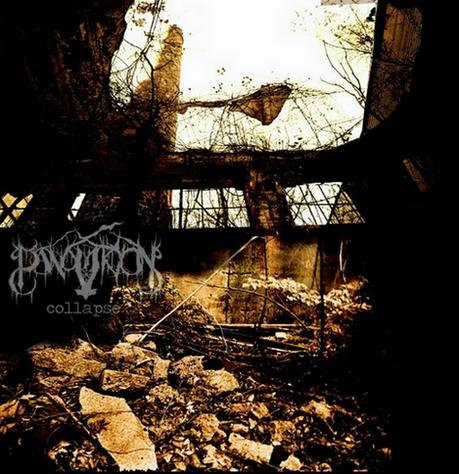
I felt inspired and decided to write a piece for Kentucky's one and only Austin "do-it-yourself" Lunn. Here's a rather long piece concerning his project's 2009 sophomore effort, Collapse. It's a few years old by now, but oh well.
Collapse is the sophomore
record of Kentucky’s one and only one-man black metal show, Panopticon. Formed in 2007 by mastermind Austin Lunn, the
project’s acclaimed self-titled debut featured a hodgepodge of different black
metal styles, all wrapped together in a raw, lo-fi, do-it-yourself package. Additionally, the album also saw Lunn
experiment with his mostly second-wave black metal sound through sparing use of
post-rock, folk, and crust punk elements throughout the record’s six main
pieces. Despite all the acclaim the
record received, Panopticon showcased
a new band still trying to find its legs, as well as decide just where exactly
it wanted to go in the first place.
Lunn’s sophomore attempt, however, sees all that indecision melt away,
making the record seem almost like that of a completely different project. A concept album, Collapse flows wonderfully from start to finish and features one
single, focused sound. The album takes
ideas only briefly touched upon in the band’s previous works and expertly
expands them, making them now essential elements to both its sound and concept;
no longer simply a black metal project, Collapse
shows Lunn fully embracing his post-rock and folk sides for the benefits of
better song and story-writing. A
fan of anarchistic and do-it-yourself mindsets, Collapse tells the story of a society oppressed, its fall into
chaos, and eventual triumphant rebirth and reconnection. From start to finish the album clearly
embodies this tale, expertly using its different elements to highlight changes
in plot and tone.
The Death of Baldr and the Coming War begins the album on a
somber note; a slow, melancholic guitar drones softly as samples of different
political pundits and newsmen play, their voices highlighting the
ills of a modern nation, and what they believe to be leading to its
“inevitable” destruction. Lunn’s drumming
slowly builds tension before allowing the track to explode into chaos, his
gruff barks angrily urging on a revolution so desperately needed. After almost ten minutes of black metal fury,
the track takes a most unexpected turn when all activity is abruptly cut off--a
quick burst of static silences the previous chaos, replacing it with the sound
of what seems to be a record player. An
acoustic ensemble, banjo included, arises and begins to play, slowly at first,
before exploding in a full-scale bluegrass experience. After the chaos of revolution, ’Baldr finds a way to end itself on a positive note, attempting to show that even in
the midst of absolute destruction and uncertainty, it is the unity of
the community that gives any cause its strength.
A clap of thunder signals the beginning of the album’s second movement, Aptrgangr.
A lone acoustic guitar is aided by a dreamy lead, Lunn’s voice
whispering encouragement behind it all. Slowly,
like in the previous track, the music builds as drums are added, giving the revolution
some sense of direction. Eventually the
music begins to grow tenser, less melodic.
The drums adopt a stomping rhythm, urging themselves forward. Again the music finally explodes—fast,
atmospheric riffs and pounding drums carrying it onward. A whining guitar wanders too and fro, unable
to stop itself or find its destination. Like
a freight train without a conductor, Aptrgangr seems unable to stop,
droning through variations of the same riffs over and over, until the music itself even begins to feel tired of the whole charade. When the music finally runs out of steam, a
single droning guitar stands defiant, refusing to surrender until becoming completely
consumed by the rising sounds of a swarm of angry bees.
Merkstave finds itself in a similarly violent state of
mind. After beginning at a rather
mid-pace, the track quickly dissolves into a brief barrage of blast beats
before settling back down to repeat this slow/fast cycle once more. After the long-winded uprising in Aptrgangr, Merkstave seems to struggle finding direction, often
utilizing the fast-slow, build-release formula to give itself a number of
internal movements, also effectively characterizing the uncertainty and
directionlessness of a new post-revolution society. Even bouts of pensive, melodic acoustic
playing cannot seem to set the track in the right direction, its stumbling
waltz continuing until finally burning itself out in another barrage of guitars
and drums.
Hope is never completely lost, though.
Not in Lunn’s political commentary, at least. Although a violent, angry, and ever-shifting
record,Collapse finally sees the light at the end of the tunnel with
its completely acoustic closer, Idavoll.
After rebelling and fighting for a new sense of direction, the new
society in the post-revolution world seems to finally find some sense of
unity. Gone are the moments of
aggression—the screams, the crashing drums, the buzzing guitars—replaced by
purely acoustic instruments and Lunn’s encouraging whispering voice. An almost-happy melody plays throughout,
signaling the hopefulness of a society once again in control of its own
destiny.
Collapse is a definite step up from the band’s debut. After flirting with different sounds and
styles on his debut, Austin Lunn truly shows his competency as a songwriter on
his sophomore release by fully exploring his sound and creating a diverse,
memorable piece in the process. Through
its four tracks, Collapse effortlessly flows between minimalistic post-rock,
grim and blasting black metal, and oddly hopeful folk soundscapes. His utilization of different influences to
not only tell a story, but to embody that tale from start to finish makes Collapse his most powerful
example of artistic expression yet, and something that should definitely be on
the radar of every half-serious metal fan.
4/5

